Physics problems and instructional strategies for developing social networks in university classrooms
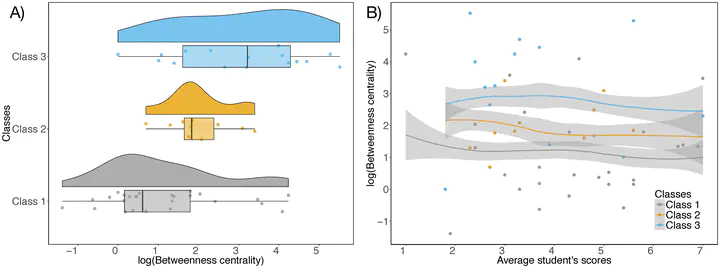 Figure from the article
Abstract
This preprint studies how physics problems and instructional strategies shape social interaction networks in university classrooms. Using social network analysis, it connects problem structure and teaching design with peer information seeking and collaborative learning.
Type
Publication
arXiv

Javier Pulgar
Physics Department, Universidad del Bío Bío

Cristian Candia
Associate Professor, Data Science Institute, School of Engineering, Universidad del Desarrollo, Chile. Director of CRiSS-LAB.
Cristian Candia is a computational social scientist studying human and collective behavior with large-scale data, network science, experiments, and AI.