Interconnectedness in Education Systems
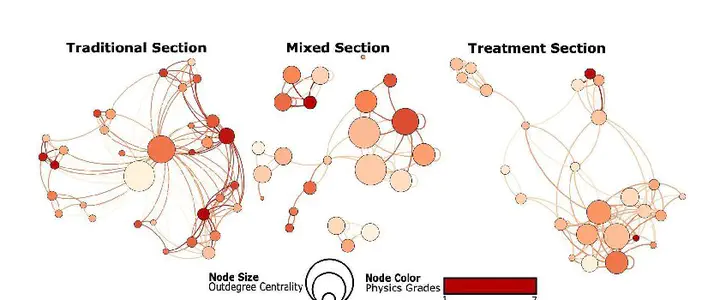 Figure from the chapter
Abstract
Education systems are webs of interconnected students, teachers, programs, institutions, and decisions. This chapter argues that a network-based view of education can improve learning, social integration, well-being, and decision making by using institutional records, experiments, and computational social science methods to map relational structures across scales.
Type
Publication
In Handbook of Computational Social Science

Cristian Candia
Associate Professor, Data Science Institute, School of Engineering, Universidad del Desarrollo, Chile. Director of CRiSS-LAB.
Cristian Candia is a computational social scientist studying human and collective behavior with large-scale data, network science, experiments, and AI.

Javier Pulgar
Physics Department, Universidad del Bío Bío