Balancing Friendship and Exploration: Grouping Strategies and Their Impact on Classroom Dynamics
Abstract
This article studies how group formation strategies affect friendship, collaboration, and academic reputation networks in high school classrooms. Using MRQAP models, it shows that affinity-based teams tend to collaborate inwardly with existing friends, while randomly assigned teams encourage outward collaborative ties across groups.
Type
Publication
The Journal of Experimental Education
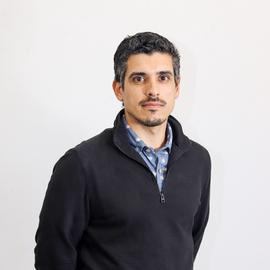
Javier Pulgar
Physics Department, Universidad del Bío Bío
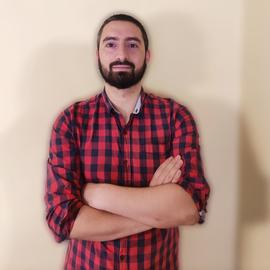
Diego Ramirez
Ph.D. Candidate

Cristian Candia
Associate Professor, Data Science Institute, School of Engineering, Universidad del Desarrollo, Chile. Director of CRiSS-LAB.
Cristian Candia is a computational social scientist studying human and collective behavior with large-scale data, network science, experiments, and AI.