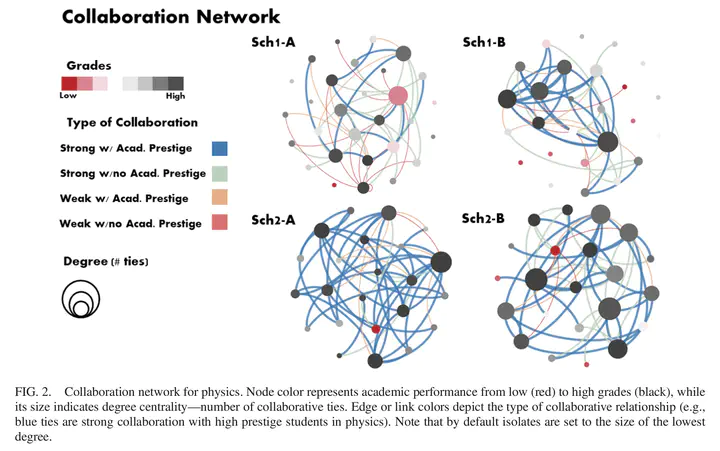
 Image credit: CRiSS-LAB
Resumen
Group configurations shape social skills and learning outcomes. This study compares random allocation with student self-selection in high school physics groups, showing that self-selected groups develop stronger friendship bonds and stability, while randomly formed groups show greater cooperation and membership change.
Publicación
Physical Review Physics Education Research, 21, 010157
Diego Ramirez
Candidato a doctorado
Javier Pulgar
Departamento de Física, Universidad del Bío-Bío
Cristian Candia
Profesor Asociado, Instituto de Data Science, Facultad de Ingeniería, Universidad del Desarrollo, Chile. Director de CRiSS-LAB.
Cristian Candia es científico social computacional y estudia el comportamiento humano y colectivo usando datos a gran escala, ciencia de redes, experimentos e inteligencia artificial.