Collective memory across books, chapters, and data
Collective memory research is moving across disciplines: cognitive science, sociology, media studies, history, network science, and data science all ask how societies remember and forget.
The recent chapters on the dynamics of collective memory and attention translate CRiSS-LAB’s quantitative work into broader conversations about memory research. The computational angle is simple: attention leaves traces. Wikipedia views, citations, media records, cultural consumption, and digital archives can be used to study how memories persist, decay, and become institutionalized.
The challenge is to connect scale with meaning. Large datasets show temporal patterns, but theory helps explain what those patterns represent: communicative memory, cultural memory, forgetting, persistence, and the social mechanisms that keep some ideas alive.
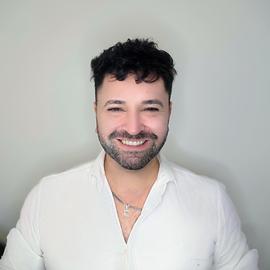
Cristian Candia
Associate Professor, Data Science Institute, School of Engineering, Universidad del Desarrollo, Chile. Director of CRiSS-LAB.
Cristian Candia is a computational social scientist studying human and collective behavior with large-scale data, network science, experiments, and AI.