Collective Intelligence at CRiSS-LAB
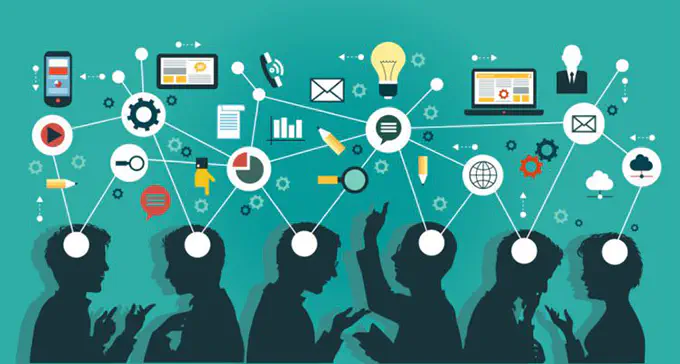
Collective intelligence is not just teamwork. At CRiSS-LAB we study how information, relationships, attention, incentives, and institutions interact to produce collective behavior across domains.
One research line studies collective memory and collective attention: why some songs, movies, scientific articles, public figures, and ideas remain present while others fade. This work uses large-scale traces of attention to model forgetting, information overload, and the role of specialized communities in filtering what remains visible.
Another line studies moral language and online engagement. Moral content can mobilize attention, but excessive moralization can also reduce engagement and polarize conversation. This matters for newsrooms, civic platforms, institutional communication, and public debate.
In education, CRiSS-LAB studies how friendship, cooperation, hierarchy, and academic reputation shape classroom dynamics. Experimental game theory, network science, and learning analytics help identify patterns of inclusion, isolation, collaboration, and early warning signals for school coexistence.
The same logic extends to higher education and career choices. Lixandria, SocialRec, and related research use networks, preferences, and recommender systems to understand educational trajectories, retention, and decision-making.
Finally, CRiSS-LAB develops civic and applied platforms such as Discolab, PriorizaChile, and Capybara. These systems translate research on collective intelligence into public tools for deliberation, education, coexistence, and institutional learning.

Cristian Candia
Associate Professor, Data Science Institute, School of Engineering, Universidad del Desarrollo, Chile. Director of CRiSS-LAB.
Cristian Candia is a computational social scientist studying human and collective behavior with large-scale data, network science, experiments, and AI.